



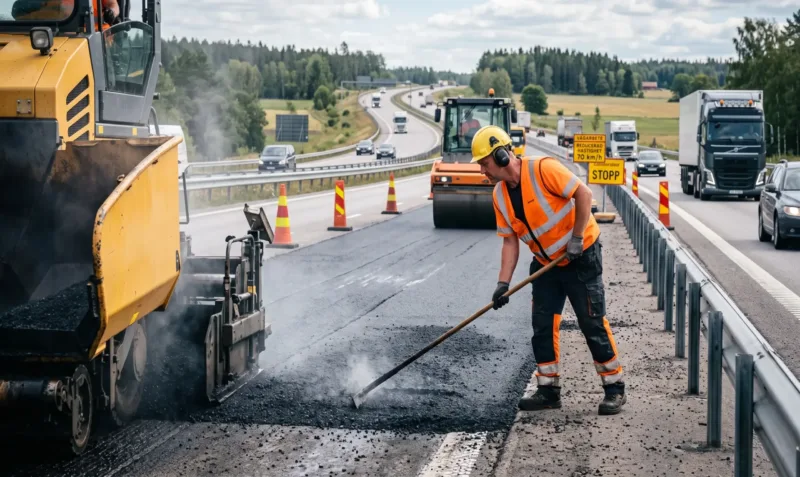
Asphalt rarely makes headlines, yet it is one of the more carbon-heavy materials in construction. The binder that holds it together, bitumen, is a petroleum product, and producing the mix means heating large volumes of aggregate. For years that was simply how it was done. Lately, in Sweden and across the Nordics, the picture has started to change.
Part of the shift is in how the mix is made. Asphalt plants that once ran on oil or gas can be fired with biofuel instead, which makes production close to fossil-free without changing what ends up on the road. The other part is reclaimed material. Old asphalt that is milled off can be ground down and blended back into new surfacing, cutting both the demand for virgin stone and the number of lorry journeys.
A common worry is that recycled or fossil-free asphalt must be weaker. It is not. In Sweden the mix is produced to the same standard, SS-EN 13108, whatever fuel the plant burns and however much reclaimed material goes in. The requirements on the finished surface are identical. The difference sits in the process, not in the road you drive on.
Much of the momentum comes from public procurement. As municipalities and the national road authority start to score climate impact in their tenders, contractors who can deliver fossil-free gain an edge. What began as a nice-to-have is turning into a requirement, and with it a question of competitiveness rather than green image.
The trend is visible among smaller and mid-sized firms too. Larssons Asfaltsservice, a family-run contractor in western Sweden, says it uses asphalt made to the national standard and treats reclaimed material and fossil-free production as a given rather than an extra. The company was founded in 2022 and works for everyone from homeowners to industry and the public sector.
The industry is quick to point out that the mix is only half the story. Any asphalt surfacing lasts only as long as the base beneath it. Lay even the greenest mix on a poorly prepared sub-base and it will crack anyway, and the climate saving is soon eaten up by having to do the job twice.
That is why paving and groundworks belong together. The right load-bearing layer, drainage and fall decide whether a surface lasts twenty years or ten, and a surface that lasts twice as long effectively halves the material used over time. Durability, in other words, is as much a sustainability question as what the mix contains.
For industry the sheer scale matters. Large logistics yards, port aprons and works car parks hold enormous quantities of asphalt, so every percent of reclaimed content and every fossil-free tonne makes a real difference. These are also heavily trafficked surfaces, which means the choice of base and binder has consequences for both the budget and the carbon ledger.
The same logic runs down the scale. Even someone looking to have a driveway paved at a home or a small business can now ask for a fossil-free mix with recycled content, something that was unusual for small jobs only a few years ago.
The transition is far from finished, but the direction is clear. As tender requirements tighten and the technology settles into place, fossil-free asphalt becomes less of a choice and more of a condition for bidding at all. For a sector long seen as slow to change, that is a faster move than many expected.